For UK businesses, photocopiers are no longer just office equipment — they’re mission-critical infrastructure. From legal contracts and HR paperwork to healthcare records, invoices, and compliance documents, printing remains a daily necessity across almost every sector.
Yet one decision quietly drains thousands of pounds from businesses every year: whether to lease or buy a photocopier.
With rising energy costs, hybrid working, tighter budgets, and rapid technology changes, more organisations are questioning traditional ownership. Photocopier leasing UK options now offer predictable costs, built-in servicing, and access to advanced multifunction technology without heavy upfront investment.
But is leasing always better? Or does buying still make sense for some businesses?
This in-depth guide breaks down photocopier leasing vs buying, looking at real UK cost comparisons, operational impact, scalability, security, and long-term ROI — so you can make a confident, informed decision.
Featured Snippet Answer
For most UK businesses, photocopier leasing offers better value than buying. Leasing provides predictable monthly costs, included maintenance, easier upgrades, and access to modern secure technology. Buying may suit organisations with very stable print needs, but often results in higher long-term costs and outdated equipment.
Understanding the Two Options in Practice
What Photocopier Leasing Really Looks Like in the UK
Photocopier leasing allows your organisation to use professional-grade office photocopiers for a fixed monthly fee over an agreed term, usually between 36 and 60 months.
Most modern leases include:
- Device rental
- Servicing and repairs
- Toner and consumables
- Remote monitoring
- Engineer call-outs
This model forms the foundation of modern managed print solutions, where businesses pay for outcomes — not ownership.
Leased machines are typically high-performance multifunction printers capable of:
- High-volume printing and copying
- Secure scanning to email or cloud
- Integration with Microsoft 365 and Google Workspace
- User authentication and audit trails
What Buying a Photocopier Actually Involves
Buying a photocopier means paying the full purchase price upfront or financing it separately. On paper, ownership sounds appealing — but the reality is often more complex.
When you buy, your business becomes responsible for:
- All maintenance and repairs
- Replacement parts
- Toner, drums, and consumables
- Software updates
- Downtime and lost productivity
Over a 5-year lifespan, these hidden costs often exceed the original purchase price.
Cost Comparison: Leasing vs Buying
Upfront Capital Impact
Buying
- £2,000–£10,000+ upfront for commercial devices
- Capital tied up in depreciating equipment
- Impacts cash flow and borrowing capacity
Leasing
- Little or no upfront cost
- Monthly operational expense
- Frees capital for growth, staff, or IT
For SMEs, schools, and charities, preserving cash flow is often decisive — making business printer leasing the preferred option.
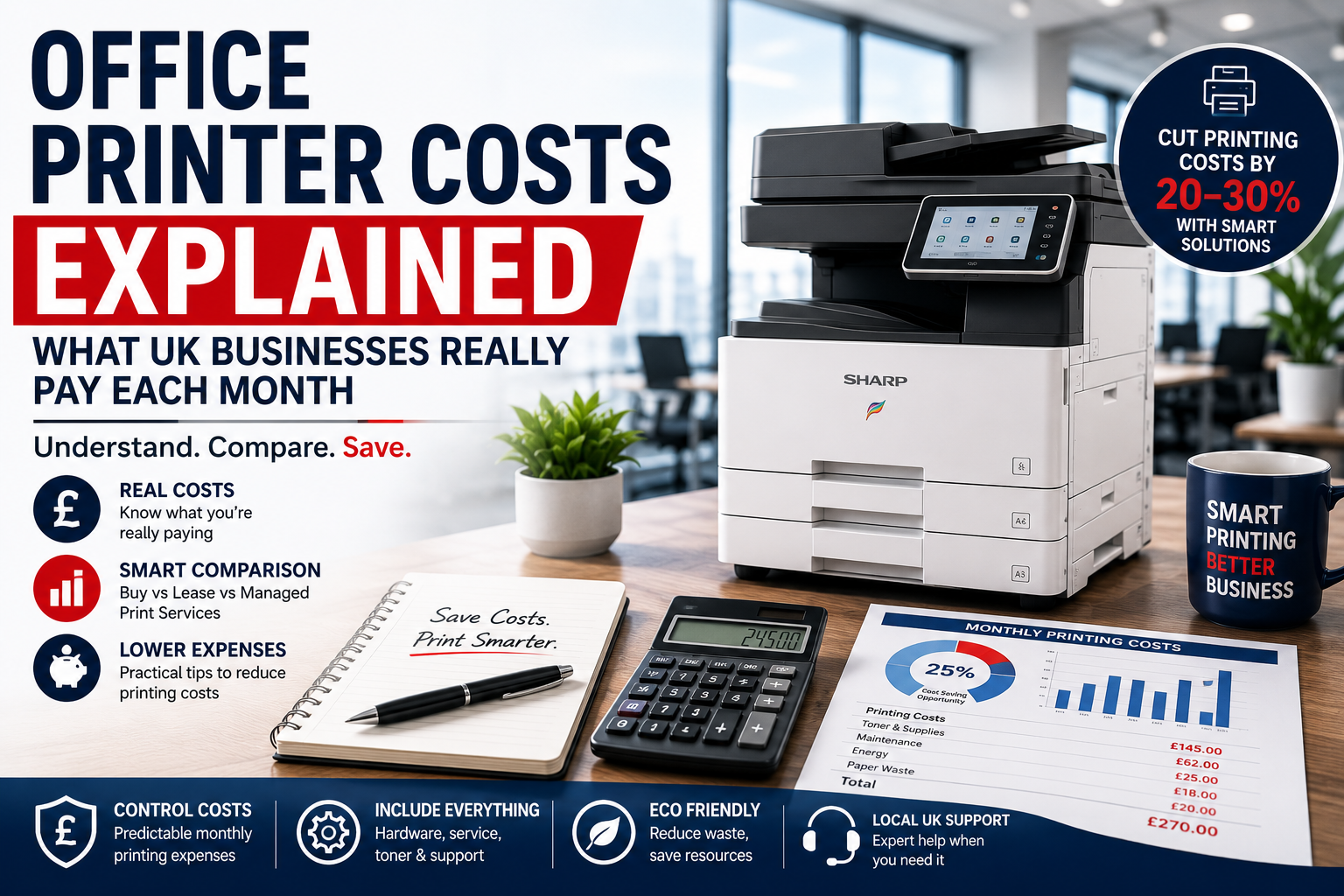
Total Cost of Ownership (5-Year View)
A realistic example for a mid-size UK office:
Buying
- Purchase price: £6,000
- Annual servicing: £900 x 5 = £4,500
- Toner & parts: ~£1,500 per year = £7,500
- Total 5-year cost: £18,000
Leasing
- £120 per month x 60 months = £7,200
- Servicing, toner, support included
That’s a difference of over £10,000, with less risk and better technology.
Flexibility & Scalability for Growing Businesses
UK businesses rarely stay static.
You might:
- Hire new staff
- Open a second office
- Move to hybrid working
- Merge departments
- Change compliance requirements
Leasing Advantages
- Upgrade machines mid-contract
- Increase or reduce print capacity
- Add finishing options (stapling, folding)
- Adapt without replacing hardware
Buying locks you into a fixed capacity — often leading to underpowered or over-spec’d machines.
Maintenance, Reliability & Business Continuity
Downtime costs more than most businesses realise.
When a purchased photocopier fails:
- Engineers charge per visit
- Parts delays halt workflows
- Staff productivity drops
Leased devices under print management services typically include:
- Proactive maintenance
- Automatic fault alerts
- Priority engineer response
- Remote fixes
For sectors like legal, healthcare, and education, reliability alone often justifies leasing.
Security, Compliance & Data Protection
Modern commercial printing solutions are networked IT devices — not just printers.
Leased devices from manufacturers like Sharp offer:
- Secure pull printing
- Encrypted hard drives
- User authentication
- GDPR-compliant audit trails
- Automatic firmware updates
Many purchased devices run outdated software — creating silent security risks.
Industry-Specific Recommendations
SMEs & Professional Services
Leasing offers predictable costs and professional reliability without capital strain.
Schools & Education
Budget certainty, safeguarding features, and reduced admin overhead make leasing ideal.
Healthcare & Care Providers
Security, uptime, and compliance strongly favour managed leased solutions.
Manufacturing & Warehousing
High-volume, durable leased devices outperform consumer-grade purchased machines.
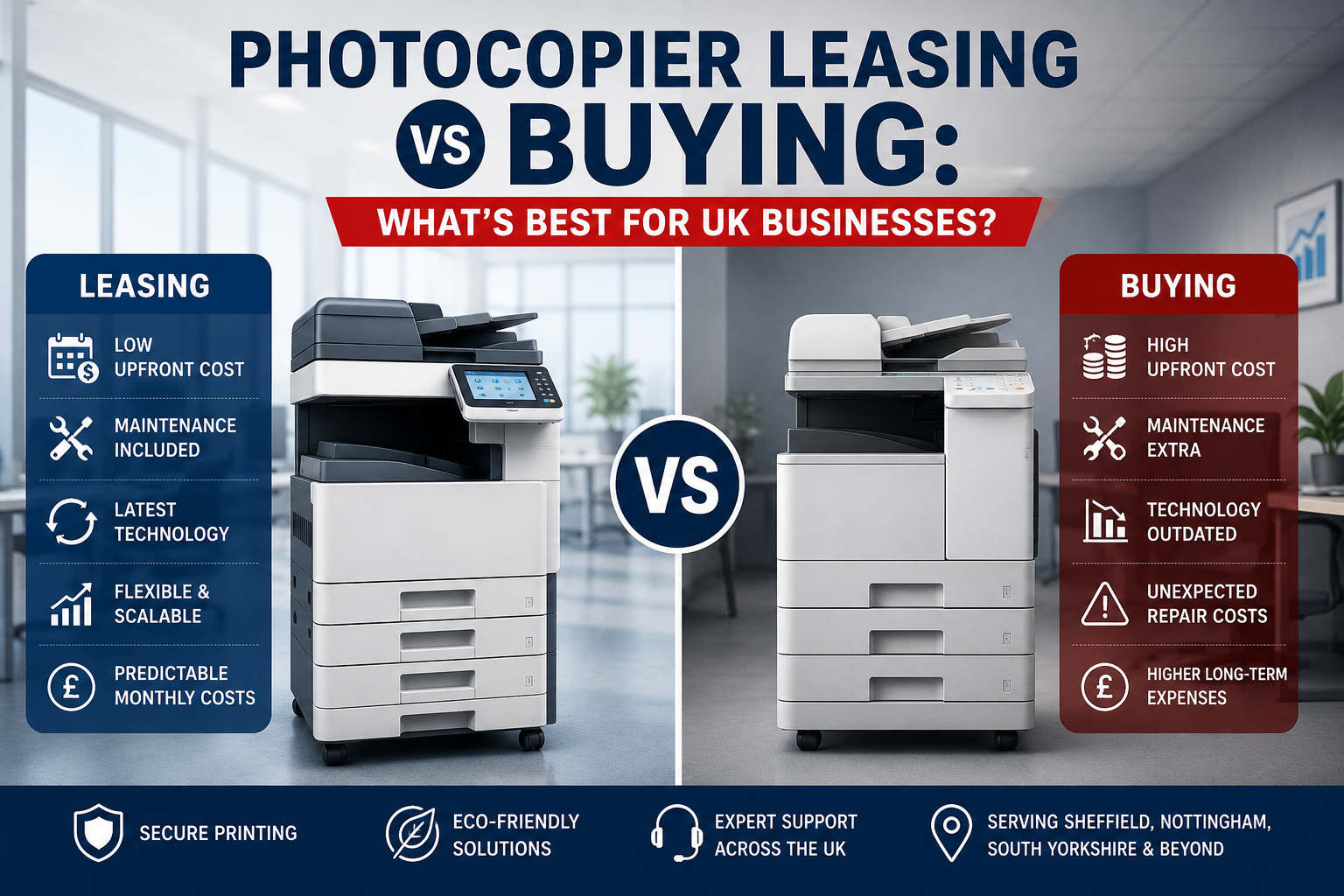
Leasing vs Buying
| Factor | Leasing | Buying |
|---|---|---|
| Upfront Cost | Low | High |
| Monthly Spend | Fixed & predictable | Variable |
| Maintenance | Included | Extra |
| Technology Refresh | Easy | Difficult |
| Security Updates | Automatic | Manual |
| Scalability | High | Low |
| Best For | Most UK businesses | Rare niche cases |
UK Printing Market Statistics
- UK businesses overspend 20–35% on unmanaged printing
- Hybrid working increased secure print demand by 40%
- Managed print users reduce paper waste by 25%
- Energy-efficient leased devices cut power usage by up to 60%
- 70% of SMEs prefer OPEX over CAPEX for office technology
The data overwhelmingly favours leasing.
How to Decide What’s Right for You
- Audit current print volumes
- Calculate total ownership costs
- Identify security and compliance needs
- Assess growth or downsizing plans
- Compare 3–5 year cost models
- Factor in downtime risk
- Speak to a specialist provider
Common Mistakes UK Businesses Make
- Buying consumer printers for business use
- Underestimating servicing costs
- Ignoring energy efficiency
- Overlooking document security
- Staying locked into outdated hardware
Expert Tips from a Print Specialist
- Always compare total cost, not headline price
- Prioritise suppliers with local engineer coverage
- Choose scalable contracts
- Review print usage annually
- Align print strategy with IT and compliance goals
Frequently Asked Questions
How much does photocopier leasing cost in the UK?
Typically £30–£150 per month depending on volume, speed, and features.
Is leasing better than buying?
For most UK businesses, yes — due to flexibility, cost control, and reliability.
What’s included in a lease?
Servicing, repairs, toner, monitoring, and support in most cases.
Can I upgrade during the lease?
Yes, many agreements allow mid-term upgrades.
Are leased photocopiers secure?
Modern leased devices include enterprise-grade security features.
Does leasing affect credit?
Leases are usually treated as operating expenses, not loans.
The Smarter Choice for UK Businesses
When weighing photocopier leasing vs buying, leasing consistently delivers:
- Lower long-term costs
- Better reliability
- Improved security
- Greater flexibility
For most UK organisations, ownership simply doesn’t make financial or operational sense anymore.
If you want to reduce print costs, modernise your office printing, and avoid unexpected expenses, leasing is the smarter route.
👉 Speak with the specialists at RED Business Machines to compare your current costs, arrange a free print assessment, or explore tailored photocopier leasing options across Sheffield, Nottingham, South Yorkshire, Derbyshire, and beyond.